



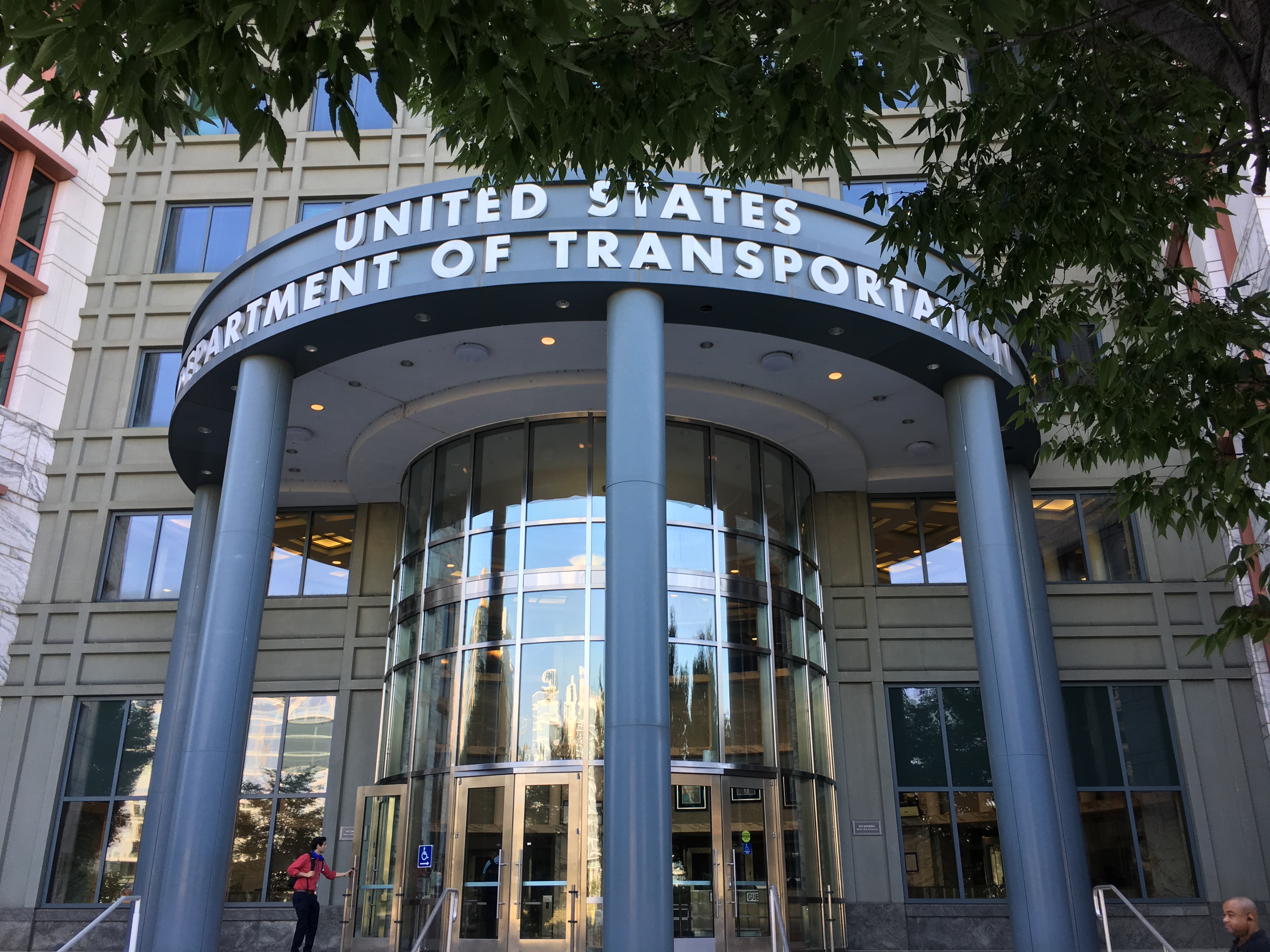
Image: RNT Foundation
What’s new: An article about the U.S. Department of Transportation’s (DOT) actions on complementary PNT (CPNT).
Why it’s important:
- DOT is continuing to act as best they can and are allowed by the Office of Management and Budget
- The most they are allowed to do is ‘admire the problem’ – not really act to ensure a resilient PNT architecture is implemented.
What else to know:
- Congrats to all, especially the four of the five awardees that are members of the RNT Foundation:
- RNTF president Dana A. Goward is the author of the below article.

5 DOT Awards for CPNT Show Continued Engagement, But Challenges Remain
The Department of Transportation (DOT) recently awarded five contracts totaling almost $5 million for “Complementary Positioning, Navigation, and Timing (CPNT) Services Rapid Phase II.”
This has been hailed by many in the positioning, navigation and timing (PNT) community as demonstrating the department’s continuing engagement in efforts to protect GPS and its users.
The five awardees are:
–National Association of Broadcasters, a non-profit trade association that has developed the Broadcast Positioning Service (BPS) that provides PNT using new-format (ATSC 3.0) television signals. They are focusing on timing first and have the potential to provide location information.
–Iridium Satellite LLC, a communications satellite company that hosted and then bought Satelles and provides satellite-based PNT.
–UrsaNav LLC, which provides terrestrial eLoran PNT technology and is also working with the U.S. Department of Defense (DoD) on a similar project.
–Viavi Solutions LLC, a company that offers two multi-orbit, resilient and GPS/GNSS-independent satellite timing services, one at LEO and one at GEO.
–MerlinTPS Corp, which provides its own proprietary terrestrial, GPS independent PNT system based on signals of opportunity.
While some have interpreted the DOT program as fostering development, all five companies provide mature technologies. In fact, applicants for the grants were required to describe how their systems met the requirements of Technical Readiness Level (TRL) 8 or higher. The department defines level 8 as “technology proven in operational environment.”
With two space-based and three terrestrial technologies in this award series, the department seems to still be interested in a variety of solutions.
This is consistent with findings in its January 2021 “Complementary PNT and GPS Backup Technologies Demonstration Report” to Congress. The report said there were sufficiently mature technologies for adoption and that a combination of signals from space and terrestrial broadcast, all synchronized with fiber-based timing, would meet national needs.
The guiding document for Rapid Phase II and other DOT CPNT efforts is the Department’s March 2024 “Complementary PNT Action Plan—DOT Actions to Drive CPNT Adoption.”
A major tenant of the plan is for DOT to act as a “clearing house” for technologies. Previous demonstration and evaluation programs and the current Rapid Phase II support that role.
CPNT Plan’s Adoption Challenges
Another of the CPNT Plan’s principles is “Government as Lead Adopter.”
The idea is agencies and departments responsible for managing risk for various critical infrastructures (Sector Risk Management Agencies, or SRMAs) will identify the need for resilient PNT in the infrastructures they are responsible for and “…they can adopt suitable and effective PNT services from viable vendors.”
This has been cited as the government both setting the example and “jumpstarting” adoption of systems nationwide.
A major challenge to this idea is that, with very few exceptions, none of the departments and agencies mentioned own or directly control any infrastructure. They therefore have no authority, need or budget to do as the plan envisions and acquire CPNT services from vendors. And, to the best of our knowledge, none have done so.
At best, these risk management agencies might be able to contract for CPNT to support their own internal IT systems and applications. But even if these needs are aggregated government-wide and contracts are let, most observers think it unlikely this would stimulate a broad swath of infrastructure and business owners to do likewise.
The nation’s goal for CPNT should be to make America safer. That means broad adoption of one or more CPNT services so if there’s a major GNSS disruption, whatever the cause, it does not significantly impact national defense, homeland security, or the economy.
While it is good to see continued engagement by the Department of Transportation, we hope it will move beyond evaluating technologies and begin efforts to truly foster broad adoption of CPNT and make the nation more secure.